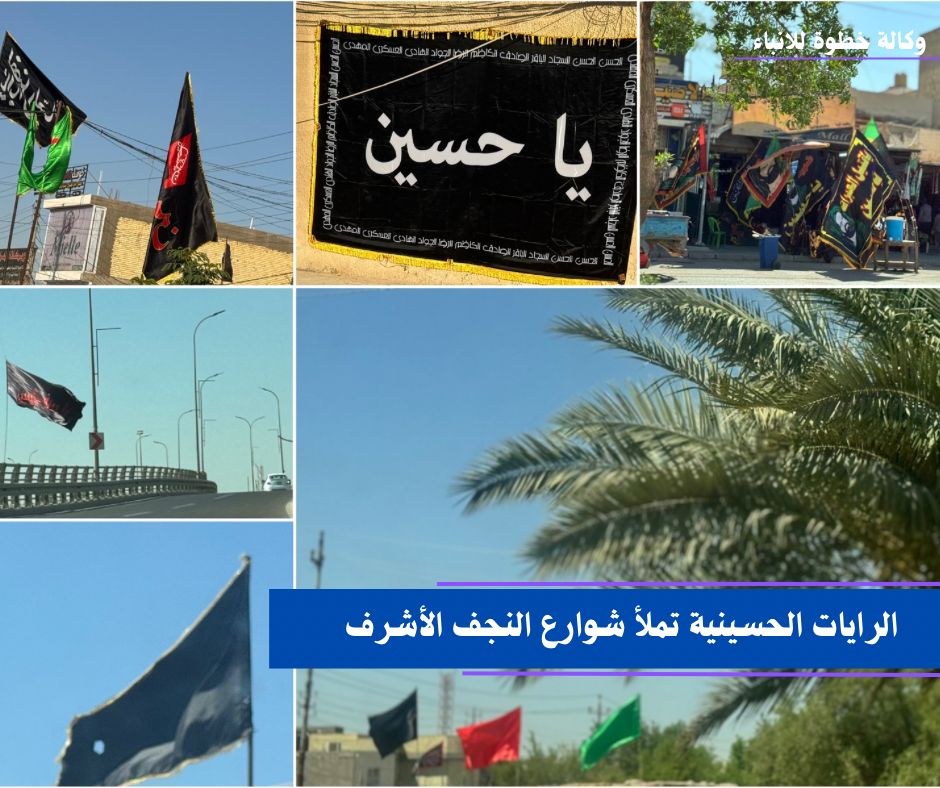
مع حلول شهر محرم الحرام ارتدت محافظة النجف الأشرف ثوب الحزن المعتاد واكتست شوارعها وأزقتها وأسواقها باللون الأسود فيما ارتفعت الرايات الحسينية واللافتات التي تحمل عبارات العزاء والمواساة على واجهات المنازل والمحال التجارية والمؤسسات العامة، في مشهد يتكرر سنوياً ليعلن بدء موسم ديني وروحي يمتد حتى زيارة الأربعين
وتتمتع النجف الأشرف بمكانة دينية خاصة في العالم الإسلامي إذ تضم مرقد الإمام علي بن أبي طالب (عليه السلام) ما يجعلها واحدة من أهم المدن التي تشهد إحياء مناسبات شهر محرم.
ومع بداية الشهر تتغير ملامح المدينة بشكل واضح حيث تتزين الشوارع والأحياء السكنية بالسواد وتنتشر مكبرات الصوت التي تبث المحاضرات الدينية والمراثي الحسينية فيما تستعد الهيئات والمواكب لإقامة برامجها الخاصة بهذه المناسبة
وفي الأسواق القديمة والأحياء الشعبية يحرص الأهالي على المشاركة في مظاهر إحياء الذكرى من خلال تعليق الرايات السوداء وإقامة المجالس الحسينية داخل المنازل والحسينيات تعبيراً عن ارتباطهم بهذه المناسبة التي تمثل جزءاً من الهوية الدينية والاجتماعية لأبناء المدينة.
كما تشهد المساجد والحسينيات حركة متواصلة لاستقبال المعزين والمشاركين في المجالس التي تتناول سيرة الإمام الحسين (عليه السلام) والقيم التي حملتها نهضته في مواجهة الظلم والدعوة إلى الإصلاح
ومع الأيام الأولى من محرم تبدأ المواكب الحسينية بتنظيم فعالياتها المختلفة سواء من خلال المجالس الدينية أو المسيرات العزائية أو الأنشطة الخدمية التي تقدم للزائرين والمشاركين.
وتنتشر هذه المواكب في مختلف مناطق المدينة، لتشكل مشهداً يعكس روح التكافل والعمل التطوعي التي تميز المجتمع النجفي خلال المناسبات الدينية
ويؤكد عدد من القائمين على المواكب الحسينية أن الاستعدادات تبدأ قبل أسابيع من دخول شهر محرم وتشمل تجهيز مواقع إقامة المجالس وتنظيم البرامج الثقافية والدينية والخدمية فضلاً عن التنسيق مع الجهات المعنية لضمان انسيابية النشاطات التي تستقطب أعداداً كبيرة من المشاركين
ولا تقتصر مظاهر إحياء محرم في النجف على الجوانب الشعائرية فحسب بل تمتد إلى الأبعاد الثقافية والاجتماعية حيث تشهد المدينة إقامة ندوات ومحاضرات فكرية تسلط الضوء على الدروس المستفادة من واقعة الطف وأهمية ترسيخ قيم العدالة والإصلاح والتسامح التي جسدها الإمام الحسين (عليه السلام)
ومع اقتراب يوم العاشر من محرم تتصاعد وتيرة الفعاليات العزائية لتبلغ ذروتها في يوم عاشوراء حيث تشهد المدينة مواكب ومسيرات واسعة يشارك فيها الآلاف من مختلف الأعمار.
وبعد انتهاء مراسم عاشوراء تبدأ مرحلة جديدة من الاستعدادات الخاصة بزيارة الأربعين، التي تعد من أكبر المناسبات الدينية في العالم وتستقطب ملايين الزائرين من داخل العراق وخارجه
وبين الرايات السوداء وصوت المراثي والمجالس الحسينية تجدد النجف الأشرف كل عام ارتباطها بتراثها الديني العريق محافظةً على طقوسها وموروثها الاجتماعي والثقافي في مشهد يعكس عمق حضور هذه المناسبة في وجدان أبنائها والزائرين الوافدين إليها من مختلف أنحاء العالم
لەگەڵ هاتنی مانگی پیرۆزی موحەڕەم، پارێزگای نەجەفی ئەشڕەف جلوبەرگی خەمی هەموو ساڵێکی لەبەرکردەوە و شەقام و کۆڵان و بازاڕەکانی بە ڕەشی داپۆشرا. هەروەها ئاڵا و ڕایەتی حوسێنی و پانۆکانی پڕ لە دەربڕینی هاوخەمی و سەرەخۆشی لەسەر ڕووی ماڵەکان، دووکانە بازرگانییەکان و دامەزراوە گشتییەکان هەڵواسرا، لە دیمەنێکدا کە هەموو ساڵێک دووبارە دەبێتەوە و دەستپێکی وەرزی ئاینی و ڕۆحی ڕادەگەیەنێت کە تا سەردانی چەڵەمەوە بەردەوام دەبێت.
لە نێوان ئاڵا ڕەشەکان، دەنگی مەرسیەکان و مەجلیسە حوسێنییەکاندا، نەجەفی ئەشڕەف هەموو ساڵێک پەیوەندی خۆی بە میراتی ئاینیی کۆنی خۆی نوێ دەکاتەوە و ڕێوڕەسم و میراتی کۆمەڵایەتی و فەرهەنگی خۆی دەپارێزێت، لە دیمەنێکدا کە قووڵی ئامادەبوونی ئەم بۆنەیە لە هەست و هۆشی دانیشتوانی شار و سەردانکەرانی هاتوو لە هەموو شوێنەکانی جیهان نیشان دەدات.
With the arrival of the holy month of Muharram, the province of Najaf dons its customary attire of mourning. Its streets, alleys, and markets are draped in black, while Hussaini banners and signs bearing messages of condolence and remembrance are displayed on the facades of homes, shops, and public institutions. This annual scene marks the beginning of a religious and spiritual season that continues until the Arbaeen pilgrimage.
Najaf holds a special religious status in the Islamic world as it is home to the shrine of Imam Ali ibn Abi Talib (peace be upon him), making it one of the most important cities for the observance of Muharram commemorations.
As the month begins, the city’s appearance changes noticeably. Streets and residential neighborhoods are adorned in black, loudspeakers broadcast religious lectures and elegies mourning Imam Hussein (peace be upon him), and religious organizations and mourning processions prepare their programs for the occasion.
In the old markets and popular neighborhoods, residents actively participate in commemorating the occasion by hanging black flags and holding Hussaini gatherings in homes and religious centers. These practices reflect their deep connection to an event that forms an essential part of the city’s religious and social identity.
Mosques and Hussainiyas also witness continuous activity as they welcome mourners and participants attending gatherings that recount the life of Imam Hussein (peace be upon him) and the values embodied in his uprising against injustice and his call for reform.
During the first days of Muharram, Hussaini processions begin organizing various activities, including religious gatherings, mourning marches, and service initiatives provided to visitors and participants. These processions spread throughout different parts of the city, creating a scene that reflects the spirit of solidarity and volunteerism that characterizes Najaf society during religious occasions.
Organizers of the processions emphasize that preparations begin weeks before the start of Muharram. These preparations include setting up venues for gatherings, organizing cultural, religious, and service programs, and coordinating with relevant authorities to ensure the smooth conduct of activities that attract large numbers of participants.
The observance of Muharram in Najaf extends beyond religious rituals to include cultural and social dimensions. The city hosts seminars and intellectual lectures highlighting the lessons of the Battle of Karbala and the importance of promoting the values of justice, reform, and tolerance embodied by Imam Hussein (peace be upon him).
As the tenth day of Muharram approaches, mourning activities intensify and reach their peak on Ashura, when the city witnesses large-scale processions and marches attended by thousands of people of all ages.
Following the conclusion of Ashura commemorations, a new phase of preparations begins for the Arbaeen pilgrimage, one of the largest religious gatherings in the world, attracting millions of visitors from within Iraq and abroad.
Amid the black banners, the sound of elegies, and the Hussaini gatherings, Najaf renews each year its connection to its rich religious heritage, preserving its rituals and social and cultural traditions in a scene that reflects the deep significance of this occasion in the hearts of its residents and the pilgrims who travel from around the world to take part in it.