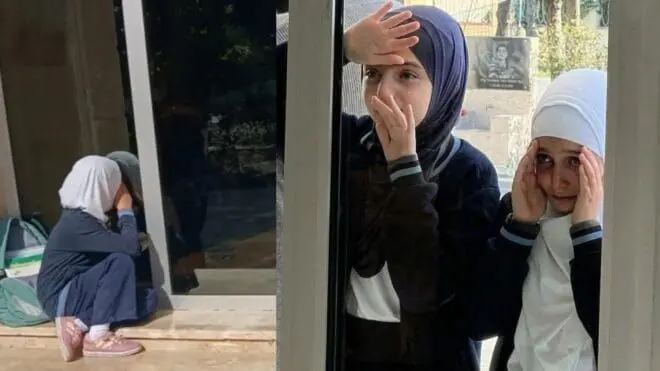
تحبس طالبة دموعها وهي تتحدث عن خوفها من فقدان مقعدها الدراسي وتستحضر بحسرة احتمال أن تصبح عودتها إلى المدرسة مرهونة بالتخلي عن الحجاب الذي ترتديه وبينما تحاول التعبير عن مشاعرها تبدو الكلمات أثقل من قدرتها على الاحتمال؛ فالأمر بالنسبة إليها لا يتعلق بقطعة قماش أو بزي مدرسي، بل بحلم تخشى أن يتوقف، وحق في التعليم لا تريد أن تخسره، ومستقبل تسعى إلى بنائه بالعلم والمعرفة.
خلف هذه الصورة الإنسانية، تتكشف قضية تضع مستقبل الطالبات أمام تساؤلات مؤلمة بشأن العلاقة بين المعتقد الديني والحق في التعلم، وحول الثمن الذي قد تدفعه الفتيات عندما تتحول القيود المتعلقة بمظهرهن إلى عائق أمام مواصلة الدراسة. فالمدرسة بالنسبة إلى هؤلاء الطالبات ليست مجرد مكان لتلقي الدروس واجتياز الامتحانات، بل مساحة لبناء الشخصية، واكتساب المعرفة، وتحقيق الطموحات، والانطلاق نحو مستقبل أكثر استقرارًا.
وفي أذربيجان، أعادت القيود المفروضة على ارتداء الحجاب في عدد من المدارس الحكومية هذه القضية إلى الواجهة، بعد تداول مشاهد وتقارير إعلامية عن طالبات ومعلمات واجهن صعوبات في دخول مدارسهن بسبب الحجاب، ما أثار ردود فعل وتساؤلات بشأن حرية المعتقد وضمان استمرار التعليم.
وبين مخاوف الطالبات من الانقطاع الدراسي، والمطالبات بحماية حقوقهن، تتجاوز القضية حدود الجدل بشأن الزي المدرسي لتطرح سؤالًا أكثر إلحاحًا: كيف يمكن ضمان حق الفتيات في مواصلة تعليمهن، من دون أن يتحول اختلاف المعتقد أو المظهر إلى حاجز يقف في طريق أحلامهن؟
احتجاجات دولية دفاعاً عن حق التعليم
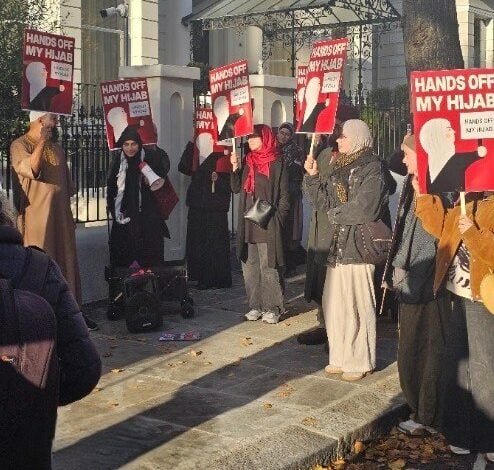
شهدت العاصمة البريطانية لندن مساء الجمعة16أكتوبر / تشرين الاول/ 2026 اعتصاماً أمام سفارة أذربيجان في منطقة هولاند بارك، شارك فيه عشرات الناشطين والمتضامنين، احتجاجاً على القيود المفروضة على ارتداء الحجاب في المؤسسات التعليمية الأذربيجانية، وتضامناً مع الطالبات والمعلمات المسلمات المتضررات منها.
وجاء الاعتصام استجابةً لدعوة اتحاد الطلاب لأجل فلسطين (ASAP) وشركائه، تحت شعار «ارفعوا أيديكم عن حجابي»، إذ رفع المشاركون لافتات تطالب باحترام حرية المعتقد، وضمان حق الطالبات في مواصلة تعليمهن من دون تمييز بسبب لباسهن الديني.
وأعلن المنظمون عزمهم مواصلة الاعتصام أمام السفارة كل يوم جمعة، إلى حين تراجع السلطات الأذربيجانية عن القيود التي يقول المحتجون إنها تحول دون دخول الطالبات المحجبات إلى الفصول الدراسية.
وتأتي هذه التحركات على خلفية تعديلات أقرها مجلس الوزراء الأذربيجاني في 21 أيلول الماضي بشأن الزي المدرسي الموحد، تضمنت حظر الملابس الإضافية المخالفة لمتطلبات الزي أو للمبدأ العلماني للتعليم العام، من دون أن تنص صراحةً على حظر الحجاب. إلا أن تطبيق القواعد أثار جدلاً واحتجاجات، عقب تقارير أفادت بمنع طالبات محجبات من حضور الدروس، واتخاذ إجراءات بحق معلمات بسبب ارتدائهن الحجاب.
وفي 12 تشرين الأول الجاري، أعلنت وزارة الداخلية الأذربيجانية توقيف 37 شخصاً على خلفية احتجاجات في العاصمة باكو، بدعوى الإخلال بالنظام العام.
من جانبها، دعت منظمة العفو الدولية، في 16 تشرين الأول، السلطات الأذربيجانية إلى إنهاء القيود المفروضة على الطالبات المحجبات والإفراج عن المحتجزين بسبب احتجاجاتهم السلمية، معتبرةً أن حرمان الفتيات من التعليم بسبب الحجاب يمسّ حرية الدين والحق في التعليم.
ويعكس الاعتصام في لندن امتداد القضية إلى خارج أذربيجان، في ظل تصاعد الدعوات إلى ضمان حق الطالبات في التعليم، واحترام حريتهن الدينية، وعدم جعل المظهر الديني عائقاً أمام استمرارهن في الدراسة.
جامعة الزهراء للبنات تتضامن مع طالبات أذربيجان
وفي محافظة كربلاء نظّمت جامعة الزهراء (عليها السلام) للبنات اليوم السبت 16 أكتوبر /تشرين الاول 2026 وقفة تضامنية مع الطالبات المسلمات في أذربيجان، رفضاً للقيود المفروضة على ارتداء الحجاب في المؤسسات التعليمية، وتأكيداً على حق الفتيات في مواصلة تعليمهن مع الحفاظ على هويتهن الدينية والثقافية.
وشهدت الوقفة التي أُقيمت في مبنى الجامعة، مشاركة الملاكات الإدارية والتدريسية وعدد من الطالبات، فيما أكدت رئيسة الجامعة، الأستاذة الدكتورة زينب الملا السلطاني، في كلمة لها، أهمية احترام حرية المعتقد وممارسة الشعائر الدينية، ورفض الإجراءات التي تحدّ من حق الطالبات في ارتداء الحجاب.
وشددت الملا السلطاني على ضرورة صون الحقوق الدينية والثقافية للمرأة المسلمة، وضمان حقها في التعليم دون المساس بقناعاتها وهويتها، في موقف تضامني يعكس رفض حرمان الطالبات من فرصهن التعليمية بسبب مظهرهن الديني.
الصدر يدعو إلى وقفة موحدة في مدارس العراق وجامعاته
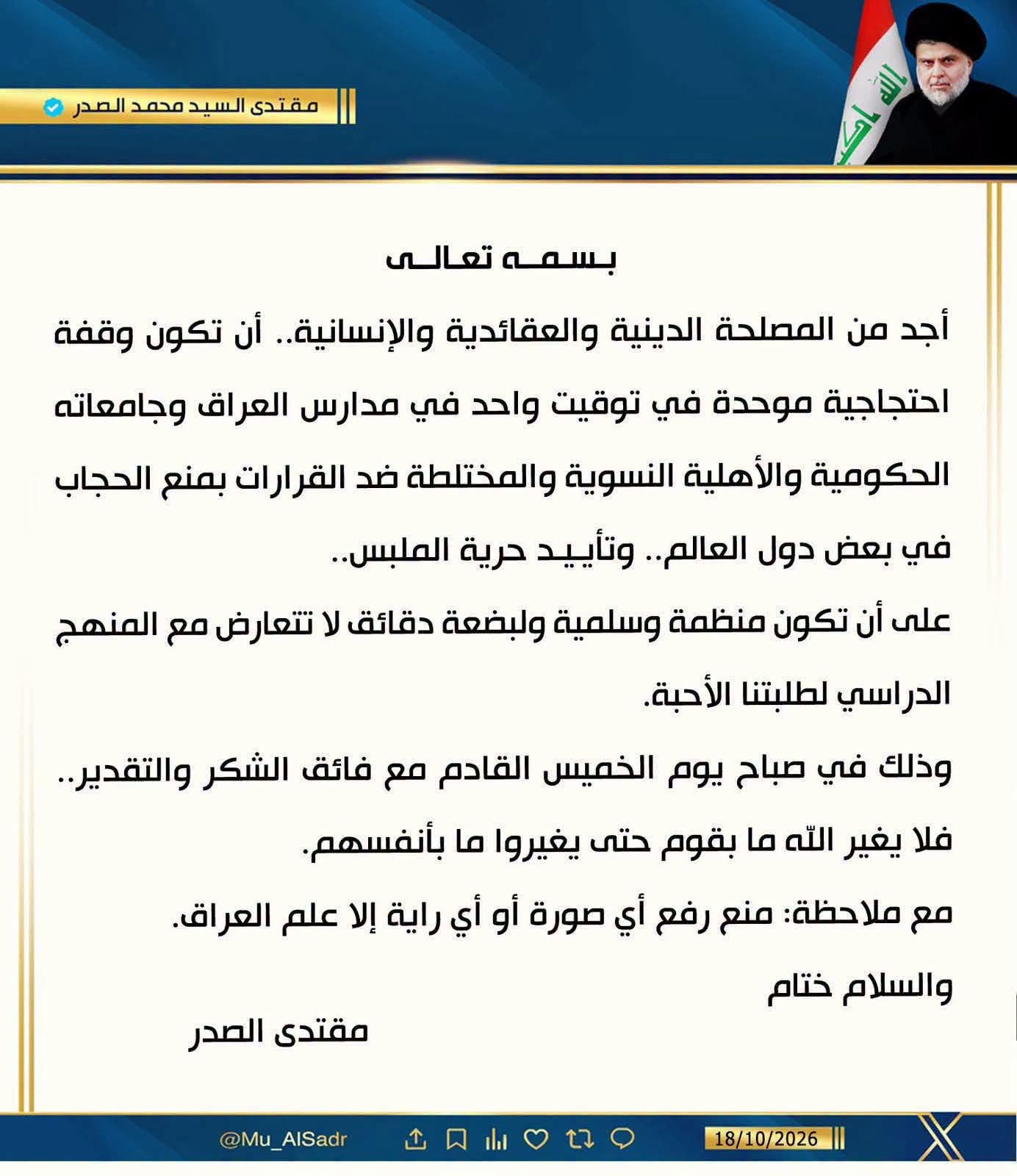
وفي إطار ردود الفعل العراقية دعا زعيم التيار الوطني الشيعي السيدمقتدى الصدر
(اعزة الله )في بيان نشره عبر حسابه الرسمي إلى تنظيم وقفة احتجاجية موحدة في المدارس والجامعات الحكومية والأهلية النسوية والمختلطة صباح الخميس 22
أكتوبر/تشرين الأول، رفضًا لقرارات منع الحجاب في بعض دول العالم وتأييدًا لحرية الملبس وشدد الصدر على أن تكون الوقفة منظمة وسلمية، وألا تستغرق سوى بضع دقائق، بما لا يتعارض مع المنهج الدراسي، مع منع رفع أي صور أو رايات باستثناء العلم العراقي.
وتضيف هذه الدعوة بُعدًا جديدًا إلى القضية إذ تنقل ردود الفعل إلى تحرك معلن داخل المؤسسات التعليمية العراقية، وتسلط الضوء على اتساع النقاش بشأن الحجاب وحرية المعتقد وحق الطالبات في مواصلة تعليمهن.
كما تبرز أهمية التعبير السلمي عن المواقف ضمن الأطر المنظمة مع الحفاظ على سير العملية التعليمية وعدم تعطيل الدروس بما يجعل المدارس والجامعات فضاءات للتعلم والحوار لا أماكن يُحرم فيها الطلبة من فرصهم الدراسية.
النجف تفتح أبواب مدارسها لاستقبال ألف طالب وطالبة من المتضررين
وفي تحرك حكومي يحمل أبعادًا إنسانية وتعليمية أعلن نائب محافظ النجف الدكتور كرار محبوبة مبادرة لاستقبال ألف طالبة متضررة من قيود ارتداء الحجاب في أذربيجان، والعمل على إتاحة الفرصة أمامهم لاستكمال تعليمهم في مدارس المحافظة، بما يعكس توجهًا نحو تحويل التضامن مع قضيتهم إلى استجابة عملية تضع مستقبلهم الدراسي في صدارة الأولويات.
وتطرح المبادرة دورًا مباشرًا للمؤسسات الحكومية المحلية في التعامل مع تداعيات الأزمات التي تهدد حق الأطفال والشباب في التعليم، من خلال فتح آفاق لاستيعاب الطالبات المتضررات وتوفير مسار تعليمي بديل يتيح لهن مواصلة دراستهم وعدم خسارة سنواتهم الدراسية كما تحمل الخطوة رسالة تضامن تؤكد أهمية حماية حق التعليم وصون كرامة الطلبة بعيدًا عن العوائق التي قد تحول دون استمرارهم في المدارس.
ويظل تنفيذ المبادرة مرتبطًا بالتنسيق مع وزارة التربية والجهات المختصة، واستكمال المتطلبات الإدارية والتربوية اللازمة للقبول، إلى جانب تحديد احتياجات الطالبات وآليات استقرارهم في المحافظة، بما يضمن تحويل الإعلان إلى إجراءات ملموسة وفرص تعليمية فعلية.
حقوق الإنسان.. التعليم وحرية المعتقد وعدم التمييز
ومن منظور حقوق الإنسان تتجاوز قضية الطالبات المحجبات الخلاف بشأن الزي المدرسي لتطرح أسئلة تتعلق بالحق في التعليم وحرية المعتقد والمساواة وعدم التمييز ومدى قدرة المؤسسات التعليمية على التعامل مع الاختلافات الدينية والثقافية من دون الإضرار بالفرص التعليمية للطلبة.
وفي هذا السياق يتناول طلال متعب المهتم بقضايا حقوق الإنسان أبعاد القضية من منظور حقوقي مع التركيز على ضرورة ضمان فرص متكافئة للفتيات في التعليم، وعدم تعريض مستقبلهن الدراسي للانقطاع بسبب مظهرهن أو معتقداتهن الدينية.
ويؤكد الإعلان العالمي لحقوق الإنسان هذه المبادئ في عدد من مواده إذ تنص المادة 26
على حق كل شخص في التعليم، فيما تكفل المادة 18حرية الفكر والوجدان والدين.
وتشكل هذه الحقوق مرجعية أساسية في النقاش بشأن كيفية التعامل مع الطالبات وضمان عدم تحول الخلافات المتعلقة باللباس إلى سبب يحرمهن من مواصلة الدراسة
وتضع هذه المبادئ الجهات المعنية أمام مسؤولية مراعاة الحقوق والحريات الأساسية عند تطبيق الأنظمة التعليمية، والعمل على معالجة الخلافات بما يحفظ كرامة الطالبات ويضمن استمرار تعليمهن، مع مراعاة الأطر القانونية المعمول بها.
الحجاب في الإسلام.. بين الالتزام الديني وحق التعليم
ومن الجانب الديني تبرز قضية الحجاب بوصفها مرتبطة بقناعات المسلمة والتزامها الديني الأمر الذي يجعل القيود المفروضة عليه موضع نقاش يتجاوز المظهر الخارجي إلى علاقة المعتقد بحرية الفرد وحقه في مواصلة حياته التعليمية.
وفي هذا الإطار يطرح رجل الدين الشيخ أحمد الجبري رؤيته بشأن مكانة الحجاب في الإسلام وما يمثله للمسلمة، إلى جانب قضية إجبار الطالبات على خلعه وانعكاسات ذلك على حقهن في التعليم.
وتتصل أهمية هذا الجانب بضرورة التعامل مع القضية بما يحفظ كرامة الطالبات ويتيح لهن مواصلة الدراسة بعيدًا عن الإجراءات التي قد تدفعهن إلى الانقطاع عن التعليم أو الاختيار بين التزامهن الديني ومستقبلهن الدراسي.
وتتقاطع هنا الاعتبارات الدينية مع الحقوق التعليمية والإنسانية، لتضع قضية الطالبات أمام مسؤولية مشتركة تتطلب البحث عن حلول تضمن استمرار التعليم، وتحترم كرامة الإنسان، وتحد من الإقصاء والحرمان من الفرص.
من الموقف إلى الفعل.. مستقبل الطالبات في صدارة القضية
بين القيود التي تواجه بعض الطالبات في أذربيجان، والدعوة إلى وقفة احتجاجية في العراق، ومبادرة النجف لاستقبال ألف طالب وطالبة، تتجه القضية نحو اختبار عملي لمدى قدرة المواقف المعلنة على إحداث تغيير ملموس في حياة المتضررين وضمان استمرارهم في التعليم.
وتضع دعوة زعيم التيار الوطني الشيعي ومبادرة نائب محافظ النجف القضية أمام مسارين متكاملين يتمثل الأول في التعبير عن التضامن ورفض القيود المفروضة على الحجاب، فيما يرتبط الثاني بإمكانية توفير فرصة تعليمية بديلة للطلبة المتضررين. ويبقى تنفيذ المبادرة مرهونًا باستكمال التنسيق مع الجهات المعنية، وتحديد آليات القبول والاحتياجات التعليمية والمعيشية والجدول الزمني للتنفيذ.
وفي ظل هذه التطورات، تبرز أهمية إيجاد حلول تضمن للطالبات مواصلة دراستهن وتحفظ كرامتهن، بما يجعل حق التعليم أولوية في معالجة القضية، ويمنح الفتيات فرصة الاستمرار في بناء مستقبلهن العلمي وتحقيق طموحاتهن.
From Azerbaijan’s Schools to Najaf: An Initiative to Help Hijab-Wearing Students Continue Their Education Amid Growing Calls to Defend Their Rights
A student holds back tears as she speaks about her fear of losing her place at school. She painfully considers the possibility that returning to the classroom may depend on giving up the hijab she wears. As she tries to express her feelings, the words seem too heavy to bear. For her, the issue is not simply a piece of cloth or a school uniform, but a dream she fears may be interrupted, an educational right she does not want to lose, and a future she hopes to build through knowledge and learning.
Behind this human story lies an issue that raises painful questions about the relationship between religious beliefs and the right to education, as well as the price girls may pay when restrictions on their appearance become barriers to continuing their studies. For these students, school is not merely a place to attend lessons and sit exams; it is a space to develop their personalities, acquire knowledge, pursue their ambitions, and work toward a more secure future.
In Azerbaijan, restrictions on wearing the hijab in some public schools have brought this issue back into the spotlight. Media reports and circulating footage have described difficulties faced by female students and teachers in accessing schools because of the hijab, prompting reactions and questions about freedom of religion and guarantees for continued education.
Amid students’ fears of being forced to leave school and growing calls to protect their rights, the issue has moved beyond a debate over school uniforms to raise a more urgent question: How can girls’ right to continue their education be guaranteed without differences in religious beliefs or appearance becoming obstacles to their dreams?
International Protests in Defense of the Right to Education
London witnessed a sit-in outside the Azerbaijani Embassy in the Holland Park area on Friday evening, October 16, 2026. Dozens of activists and supporters took part in the protest against restrictions on wearing the hijab in Azerbaijani educational institutions and in solidarity with Muslim female students and teachers affected by these measures.
The sit-in followed a call by the Alliance of Students for Palestine (ASAP) and its partners under the slogan “Hands Off My Hijab.” Participants held signs demanding respect for freedom of religion and the right of female students to continue their education without discrimination based on their religious dress.
The organizers announced their intention to continue holding the sit-in outside the embassy every Friday until the Azerbaijani authorities reverse restrictions that protesters say prevent hijab-wearing students from entering classrooms.
The demonstrations follow amendments adopted by the Azerbaijani Cabinet of Ministers on September 21 concerning school uniforms. The amendments prohibit additional clothing that violates uniform requirements or the secular principles of public education, without explicitly banning the hijab. However, the implementation of these rules has sparked controversy and protests following reports that hijab-wearing students were prevented from attending classes and that disciplinary measures were taken against teachers for wearing the hijab.
On October 12, Azerbaijan’s Interior Ministry announced the detention of 37 people in connection with protests in the capital, Baku, on the grounds of disturbing public order.
Amnesty International called on the Azerbaijani authorities on October 16 to end restrictions imposed on hijab-wearing students and release those detained for participating in peaceful protests. The organization considered denying girls access to education because of the hijab an infringement on freedom of religion and the right to education.
The sit-in in London reflects how the issue has extended beyond Azerbaijan, amid growing calls to guarantee students’ right to education, respect their religious freedom, and ensure that religious appearance does not become a barrier to continuing their studies.
Al-Zahraa University for Women Stands in Solidarity with Azerbaijani Students
Al-Zahraa University for Women held a solidarity rally on Saturday, October 16, 2026, in support of Muslim female students in Azerbaijan. The rally rejected restrictions on wearing the hijab in educational institutions and reaffirmed girls’ right to continue their education while preserving their religious and cultural identity.
The event, held on the university campus, was attended by administrative and teaching staff as well as a number of students. In her address, the university president, Professor Dr. Zainab Al-Mulla Al-Sultani, stressed the importance of respecting freedom of belief and the practice of religious rituals, rejecting measures that restrict students’ right to wear the hijab.
Al-Mulla Al-Sultani emphasized the need to protect Muslim women’s religious and cultural rights and guarantee their right to education without compromising their convictions or identity. The rally reflected opposition to depriving students of educational opportunities because of their religious appearance.
Al-Sadr Calls for a Unified Demonstration in Iraqi Schools and Universities
As part of the Iraqi response, the leader of the National Shiite Movement, Muqtada al-Sadr, called in a statement published on his official account for a unified demonstration at public and private schools and universities, including women-only and mixed institutions, on the morning of Thursday, October 22.
The demonstration was called to reject decisions banning the hijab in some countries and to support freedom of dress. Al-Sadr stressed that the gathering should be organized and peaceful, last only a few minutes, and not interfere with the school curriculum. He also instructed participants not to raise any pictures or banners other than the Iraqi flag.
The call adds a new dimension to the issue by moving the response toward an announced action within Iraqi educational institutions. It also highlights the expanding debate over the hijab, freedom of religion, and students’ right to continue their education.
The initiative further underscores the importance of expressing views peacefully and within an organized framework while preserving the normal course of education and avoiding disruption to classes. Schools and universities, in this context, should remain spaces for learning and dialogue rather than places where students are deprived of educational opportunities.
Najaf Opens Its Schools to Receive 1,000 Students Affected by the Restrictions
In a government initiative with humanitarian and educational implications, Najaf Deputy Governor Dr. Karrar Mahboba announced a plan to receive 1,000 female students affected by restrictions on wearing the hijab in Azerbaijan and work to provide them with an opportunity to continue their education in the province’s schools. The initiative reflects an effort to translate solidarity with their cause into practical action that places their educational future among the top priorities.
The initiative highlights the potential role of local government institutions in responding to crises that threaten children’s and young people’s right to education. This includes exploring ways to accommodate affected students and providing an alternative educational pathway that allows them to continue their studies without losing academic years. The move also sends a message of solidarity emphasizing the importance of protecting the right to education and preserving students’ dignity.
Implementation of the initiative will depend on coordination with the Ministry of Education and relevant authorities, completion of the administrative and educational requirements for admission, and identification of the students’ needs and arrangements for their accommodation in the province. These steps will be necessary to turn the announcement into concrete procedures and actual educational opportunities.
Human Rights: Education, Freedom of Religion, and Non-Discrimination
From a human rights perspective, the case of hijab-wearing students goes beyond a dispute over school uniforms. It raises questions about the right to education, freedom of religion, equality, non-discrimination, and the ability of educational institutions to accommodate religious and cultural differences without harming students’ educational opportunities.
In this context, Talal Mutaab, who is involved in human rights issues, addresses the case from a rights-based perspective, focusing on the need to ensure equal educational opportunities for girls and prevent their academic futures from being disrupted because of their appearance or religious beliefs.
The Universal Declaration of Human Rights establishes these principles in several articles. Article 26 recognizes everyone’s right to education, while Article 18 protects freedom of thought, conscience, and religion.
These rights provide an important reference point in discussions about how students should be treated and how discrimination that prevents them from continuing their education can be avoided.
They also place responsibility on the relevant authorities to consider fundamental rights and freedoms when implementing educational regulations and to resolve disputes in ways that preserve students’ dignity and guarantee continued education, while taking applicable legal frameworks into account.
The Hijab in Islam: Religious Commitment and the Right to Education
From a religious perspective, the hijab is associated with a Muslim woman’s convictions and religious commitment. Restrictions on wearing it therefore raise questions that extend beyond outward appearance to the relationship between personal belief, individual freedom, and the right to continue one’s education.
In this context, religious scholar Sheikh Ahmed Al-Jubouri presents his perspective on the status of the hijab in Islam and its significance for Muslim women, as well as the issue of compelling female students to remove it and the
implications for their right to education.
This dimension of the issue highlights the importance of addressing the situation in ways that preserve students’ dignity and enable them to continue their studies without measures that may push them to abandon education or force them to choose between their religious commitment and academic future.
Religious considerations intersect here with educational and human rights concerns, placing the issue before a shared responsibility to seek solutions that ensure continued education, respect human dignity, and reduce exclusion and the denial of opportunities.
From Statements to Action: The Future of Students at the Heart of the Issue
Between the restrictions facing some students in Azerbaijan, the call for a demonstration in Iraq, and Najaf’s initiative to receive 1,000 students, the issue is becoming a practical test of whether public positions can bring about meaningful change in the lives of those affected and guarantee their continued education.
The call by Muqtada al-Sadr and the initiative announced by Najaf Deputy Governor Dr. Karrar Mahboba represent two complementary approaches. The first focuses on expressing solidarity and rejecting restrictions on the hijab, while the second concerns the possibility of providing an alternative educational opportunity for affected students. The initiative’s implementation will depend on completing coordination with the relevant authorities and defining admission procedures, educational and living requirements, and a clear implementation timeline.
Amid these developments, the need for solutions that allow students to continue their studies and preserve their dignity remains paramount. Protecting the right to education must be central to addressing the issue, giving girls the opportunity to pursue their academic futures and achieve their ambitions.
Important editorial note before publication: The original Arabic text contains details that should be verified, including the dates of the events, the reported number of detainees, the exact wording of the Azerbaijani regulations, and the implementation status of Najaf’s initiative. The sections referring to Talal Mutaab and Sheikh Ahmed Al-Jubouri should also be supported by their actual statements or interviews. I have translated the information provided without independently verifying these claims.